We all search for the keys to a longer, happier life. We often think the answers lie in grand gestures—a new career, a cross-country move, or finding a singular, all-consuming passion. But what if the real secrets are smaller, more surprising, and woven into the fabric of our daily lives?
The book Ikigai: The Japanese Secret to a Long and Happy Life explores the wisdom of the world’s longevity hotspots. It identifies four foundational keys to their well-being: a healthy diet, daily exercise, forming strong social ties, and finding a purpose in life—an ikigai.
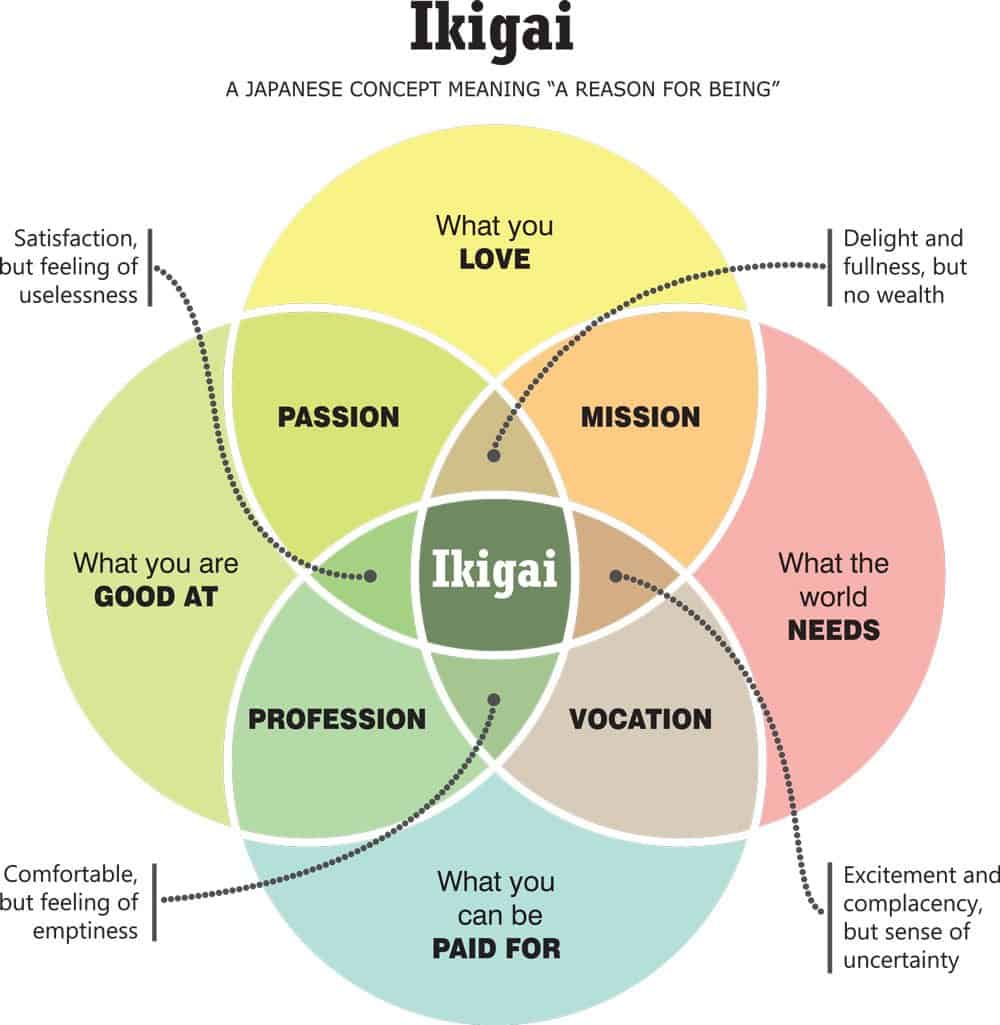
“The grand essentials to happiness in this life are something to do, something to love, and something to hope for.” – Washington Burnap
Yet, beyond this foundation lie powerful, counter-intuitive practices. This article unpacks few of these surprising takeaways, offering a different path to a long and meaningful life.
1. Not All Stress Is Your Enemy
While it’s widely known that intense, sustained stress is harmful, the wisdom from Ikigai reveals a surprising truth: a life without any challenge leads to mental decay.
This is where a little stress becomes your ally. Exposing ourselves to manageable challenges—like stepping outside our comfort zone to learn something new—revitalizes the brain and keeps it engaged. This book suggests that manageable challenges are the very thing that keeps our minds prepared, resilient, and sharp.
2. To Live Longer, Don’t Fill Your Stomach
One of the simplest yet most profound longevity secrets comes from a practice in Okinawa known as “hara hachi bu.” This principle advises that you should stop eating when you feel your stomach is about 80 percent full. The book frames this within two core rules: “Take it slow” and “Don’t fill your stomach.”
The rationale is brilliantly simple. Eating until you are completely full wears down the body with long, taxing digestive processes that accelerate cellular oxidation. As one of the core tenets of ikigai states, “Less is more when it comes to eating for long life.”
3. The Happiest People Don’t Achieve the Most
A core element of happiness is the ability to enter a state of “flow”—a condition where you are so completely immersed in an activity that you lose track of time. This is when we experience pleasure, creativity, and a sense of optimal experience. The path to this state is simple – “Concentrating on one thing at a time may be the single most important factor in achieving flow.”
The most surprising insight here is the concept of “microflow.” The key to happiness isn’t just finding flow in big, passionate projects. It’s about developing the ability to turn routine daily tasks—from cleaning a room to filling out a spreadsheet—into enjoyable, immersive moments by giving them our undivided attention.
4. Perfection Is Fragile, Imperfection Is Resilient
Two complementary concepts offer a powerful way to face life’s challenges. The first is wabi-sabi, the Japanese practice of finding beauty in things that are flawed, imperfect, and fleeting—like a cracked teacup or a fading leaf. It teaches us to appreciate the transient and incomplete nature of the world.
This acceptance of imperfection is complemented by another mindset: becoming “antifragile.” While something that is resilient can resist shocks and stay the same, the book explains, “the antifragile gets better.” It gains strength from hardship and disorder. To build this mindset, we can adopt the Stoic practice of “negative visualization”—imagining the worst-case scenario to prepare ourselves for when pleasures are taken away. This shifts our goal from avoiding problems to learning how to grow stronger from them, and from chasing an unattainable, perfect life to appreciating the beautiful, imperfect one we have.
5. Your Body Needs to Move, Even for Five Minutes
Being sedentary has severe and surprisingly immediate consequences for your body. The data is stark:
• After 30 minutes of sitting, your metabolism slows down by 90 percent.
• After two hours of sitting, your good cholesterol drops by 20 percent.
What’s happening? The enzymes that move bad fat from your arteries to your muscles, where it can be burned off, slow down dramatically. Over time, this contributes to “hypertension, imbalanced eating, cardiovascular disease, osteoporosis, and even certain kinds of cancer.” The solution, however, isn’t an exhausting workout regimen but a simple act of stewardship. As the book advises, “The body you move through life in needs a bit of daily maintenance to keep it running for a long time.” Just getting up for five minutes is enough to get things going again, a small but vital act of daily care.
Conclusion: Live in the Moment You Have
A long, happy, and meaningful life isn’t built on a single grand solution. It is the quiet accumulation of small, mindful habits and powerful shifts in perspective. Principles like the 80 percent rule, the pursuit of microflow, and five-minute movements show that consistent, gentle acts are what collectively create a resilient and joyful life. By focusing less on perfection and more on process, we can find joy, resilience, and purpose.
Life is not a problem to be solved. Just remember to have something that keeps you busy doing what you love while being surrounded by the people who love you.
Which one of these small changes could you invite into your life, starting today?
AI assisted in content summary from book annotations. NotebookLM